Feeds:
Posts
Comments

Archive for the ‘Green Vegetables’ Category

Duck-Hominy-Cabbage2

I’m still working on my wild duck cooking skill and the best result I’ve gotten so far is through removing the breasts and legs and cooking them separately. I’ve made a “quick salad” for my kids and I recently and I basically sautéed everything for different times and then sliced and served on top of a tart green salad. That was very nice and I achieved the well cooked crispy legs I complained about missing in this post. I also managed to get the breasts to be medium with a crispy skin, but some parts were over-cooked a bit and overcooked wild duck is not a very good thing.

Baked Duck Legs

Wild Duck-Legs-Breast

For this dish I took it to the next logical level and did what experienced cooks and chefs always instruct us to do: cook the breasts and legs separately each to their optimum doneness. It’s that “optimum doneness” part that can be a bit tricky while shooting for a crisp skin on such lean small birds. The way I tackled it is to cook the breasts sous vide and the legs baked in a very hot oven. The legs were well-done and crisp and the breasts were a lovely medium rare and a nice rosy color, even after a quick sear in a hot pan to crisp the skin. Before cooking the meat I simply salted it and rubbed it with a bit of thyme the night before and the breasts were packaged in FoodSaver bags with a bit of butter in  there before going in the  water at 55C for about an hour.

To go with the duck I made red braised cabbage and fried hominy cakes. The cabbage is from Gordon Ramsey’s “*** Chef” that I posted about a while back. It’s a very simple recipe of cabbage, butter and vinegar. The end result is delicious and very flavorful, much more than the sum of its parts. The hominy cakes are another direct rip off from Hank Shaw where he also pairs it with duck, canvasback to be exact. I followed Hank’s recipe verbatim and it worked perfectly. The grits cakes held together and had a great crispy exterior and a lovely soft interior. The flavor was mild and it really offset all the other robust flavors in the dish from the duck, cabbage and sauce. The dish needed the texture and the cakes delivered it in strides. The bread crumbs I used were made from a loaf of bread I baked with poppy seeds and that’s why the cakes’ crust has all these little black specs in it. That looked pretty neat and worked well with the sort of Germanic theme of dish.

Hominy Grits Cakes

Hominy Grits Cakes2

The sauce here is based on the duck carcasses. After removing the breasts and legs, I cut up the remaining bones and trimmings and made a stock with them. I wanted the stock to be robust and full of flavor, so I first roasted the cut up oil-rubbed carcasses and sautéed a bunch of aromatics in the drippings in the pan. Then I deglazed the pan with Madeira and sherry vinegar. Everything went in the pressure cooker and cooked at 15 psi for about an hour and half. I ended up with a good 1.5 quarts of amazing duck stock. I used about a cup for the sauce and the rest is now frozen for other applications (possibly an oyster and duck gumbo to use up the last three birds I have in the near future). The sauce is prepared like a traditional red wine sauce made by simmering red wine and aromatics with the addition of chopped fresh beets. I added the beets for color and flavor, another item that to me sounds Germanic as well. After the wine is reduced I added in the duck stock and allowed that to reduce a bit as well before enriching with a bit of butter. The sauce had everything I was looking for a rich color and deep flavor.

Duck-Hominy-Cabbage

Read Full Post »

Teal-Farro-Delicata-Spiced Wine

About a month or so ago I finally got all my plans in order and booked a hunting trip with a local guide to see if I can get myself some wild ducks. It’s been many years since I’ve been hunting but finally I get myself a gun, license and practiced some clay shooting at local range to get the rust out of my shooting. In no small way I have Hank Shaw to thank for the motivation. To say his hunting, fishing and cooking articles at his blog and in his book, “Hunt, Gather, Cook: Finding the Forgotten Feast” were inspiring is an understatement. All in all, I ended up with several mallards that day and a couple of nice teal. Teal are small, about the size of a pigeon and are supposed to be delicious so I wanted to show them off by cooking them whole.

Teal

I roasted them simply by following Hank’s instruction. I first seasoned them with salt and a mixture of orange zest, allspice and thyme. I then baked the birds in a very hot oven to a medium rare. That worked well for the breasts, but honestly I was not crazy about the texture of the legs. They remained a bit tough for my liking and the skin did not crisp as well as I would’ve liked either. The flavor of the teal though was very good. They tasted rich and robust but not too gamy. I’m glad I made a full-flavored sauce to go with them. The sauce is from a Mario Batali recipe in the Babbo Cookbook and it’s not much more than a reduced red wine sauce flavored with allspice and cloves. Batali serves it with venison and a pumpkin caponata.

Teal-Farro-Delicata-Spiced Wine2

I took another page from that recipe and made a much simplified version of that caponata using Delicata squash which is amazingly sweet. I roasted it and then tossed it with sauteed onions, raisins and red wine. To make this more substantial I tossed the squash with cooked farro. The combination was very tasty, like a rustic and comforting risotto.  The flavor of the birds was wonderful with the spiced wine sauce and the earthy squash farro.

Read Full Post »

I’ve had a fig tree in my back yard for the past eight or nine years maybe. I also first heard or read about wrapping fish in the leaves even before that in a Food and Wine article about Alice Waters if I am not mistaken.  I cannot tell why it took me so long to finally try this but it is a delicious and classy way of  cooking and serving fish – beautiful wild King Salmon in this case. The recipe (or more like process) is very simple and it is from the classic Chez Panisse book by Paul Bertolli and Alice Waters. I picked a few nice fig leaves from the backyard tree and washed them thoroughly. I rubbed them with a bit of olive oil and then trimmed and seasoned the fish with salt and pepper.

Nothing is needed to tie the leaves around the fish. I just laid the fillets on the oiled leaves and wrapped the leaves around the fish the best I could. These are ready to go on the grill now. So, I had a hot charcoal fire ready and laid the fish on it with the leaf seams down. After grilling for a few minutes the leaves are basically sealed and the fish can be flipped on the other side to finish cooking. The fig leaves imbue the fillet with a delightful smoky musky aroma and taste that really complements the fattiness of the meat. The leaves are not meant to be eaten by the way. Instead I peeled them gently from the fish when I served it and then dressed the fish with the sauce.

The sauce is a straightforward beurre rouge, or red butter sauce. It’ made by cooking down a lot of wine and aromatics like carrots, celery, onions, shallots, thyme…until you’re only left with a few tablespoons. Then you stir in lot of cold butter and strain the tasty light red emulsion and keep it warm until ready to serve. Like any butter sauce, it’s not a good idea to make this too far in advance because as it sits it can, and probably will, break and separate. The best way to hold it for thirty minutes or so is to leave the small pot containing the sauce on top of a larger pot of hot steaming (not boiling) water as in a double boiler.

I was not sure what to serve with the fish so I flipped through the same book for ideas and found Paul Bertolli’s version of another French Bistro classic. Leeks vinaigrette is made by boiling leeks until tender and then dressing them up with a vinaigrette that typically includes shallots and red wine vinegar. This recipe incorporates anchovies and a garnish of hard cooked eggs as well. Since I was grilling the fish I decided to get some grill flavor and marks on the leeks to. Why waste a perfectly good roaring hot pile of charcoal? So after boiling the leeks I rubbed them with a bit of oil and grilled them for a minute or so per side. Then I tossed them in the dressing and plated them topped with the minced hard cooked eggs and more dressing. The grilled leeks got amazingly sweet and smoky on the grill and were so delicious in this preparation that I could eat a whole pile of them. The worked great with the fish too and did not distract from the lovely flavor of the fish. Now, I hope it is not going to take me another 8 years before I use the fig leaves to cook again!

Read Full Post »

It might not look like it, but this dish’s inspiration and flavor is Lebanese. I love swiss chard ribs, those central stalks in each  leaf that usually get thrown away. My mom always quickly boils them and tosses them with tahini, garlic and lemon juice. I was eating some of those recently and wanted to make them part of a more substantial plate. Lamb came  to mind first, but Diana is not crazy about lamb. So, beef was my other option and short beef ribs seemed like they would work best with the chard ribs. The eggplant and yogurt made sense as natural companions flavor and theme-wise.

The beef ribs were cooked sous vide for 72 hours. They were tender but not mushy or falling apart. Before serving them, I browned them in some heavily seasoned clarified butter. In Lebanese cooking Samneh is the name for clarified butter and it is used extensively as both a cooking medium and for flavoring. To season it I used a spice mix that I get from my grandmother every time I am in Lebanon. I usually pick up a good size bag of the mix and store it in the freezer. It’s made form a mixture of whole spices and herbs including allspice, marjoram, anise, rose buds, cinnamon and a few other varieties. Typically, I just grind as much as I need in the spice grinder. I melted the clarified butter and added a couple of large pinches of the ground spice mixture. That warmed and heated up a bit before the fully cooked boneless ribs went in for a nice spiced butter bath. That also helped them get a very attractive dark mahogany color in addition to a spectacular exotic flavor.

I used swiss chard in two forms here, the sauced whole ribs and a ragout made from the ribs and leaves. I was hoping to retain the nice red color that red swiss chard ribs have so instead of boiling them as is typical, I cooked them sous vide in a pouch with herbs, garlic and a little olive oil. Unfortunately, it seems that the red color is not just water-soluble, but also not very heat-stable. The ribs ended up losing most of that color when cooked. I selected most of the nice looking ribs and left them whole, the rest got diced up to use in the ragout. The whole ribs were dressed with a walnut-tahini sauce. The sauce is just an update of the classic tahini+garlic+lemon juice+cumin with the addition of finely chopped walnuts. It worked very well with every component on the plate.

For the ragout of chard, I diced the rest of the cooked ribs and chopped the blanched leaves. I then cooked these with plenty of shallots and chopped walnuts in clarified butter. I tossed in a few sliced dried apricot and seasoned the mixture with black pepper and pomegranate molasses. It ended up delicious, with a good peppery kick, sweet-tart flavor and a touch of bitterness. This combination went great with the rich beef ribs.

The eggplant is based on a traditional Lebanese eggplant puree called mtabal. Typically, like it’s close cousin Babba Ghanouj, is made from eggplant that is cooked over charcoal in its skin until that turns black and charred. It is then peeled and pureed with flavorings that include garlic, lemon juice, cumin and in the case of Babba Ghanouj tahini sauce. I wanted something a bit more refined for this so I opted to cook the eggplant (I used the slender Japanese type)  sous vide along with olive oil, grated ginger, salt, Aleppo pepper and a little water. When completely soft, I pureed the  eggplant and it’s cooking liquid with a bunch of blanched cilantro and a small handful of blanched parsley. Last minute adjustments included the addition of some Meyer lemon olive oil, smoked paprika and lemon juice.

The yogurt dumplings are a variation on the yogurt spheres that I posted about here a while back made using an Alginate bath. In this case, instead of loosening the Labneh (Greek-style strained yogurt) too much, I left it fairly thick and seasoned it lightly with salt. Due to the thick consistency, the yogurt does not form perfect loose spheres, instead it makes nice slightly misshapen dollops when the skin forms around it. When plated the yogurt looks a lot like a dumpling and gently oozes a thick sauce when the skin is pierced. It was a very cool use for the of the spherification process and worked great in taste, texture and look.

About two or three weeks before this dinner I dehydrated red bell peppers and tomatoes. I knew I would be using them for something and this seemed fitting. To do that, I thinly sliced the fruit on a mandolin and laid them on parchment covered baking sheets. I seasoned them with a touch of salt and ground coriander seeds. they dried in a very low oven (around 165F) for about 12 hours until they turned crispy. They looked very neat and had a delicious concentrated flavor. Stored in an air-tight container with a disicator  packet they came out perfectly crisp still and probably would’ve lasted a few more weeks.

To plate the dish, I spread some of the eggplant puree on the rectangular plates with the spiced short rib on one end along with some of the sauced chard ribs. I used the chard ragout as a base for the short ribs and placed a couple of yogurt dumplings on top of the eggplant puree. These were seasoned with a bit of the spice mix and a few strands of saffron. Some of the tahini-walnut sauce also went on the eggplant in the form of small dollops from a squeeze bottle and on the short rib to act as anchor for a little garnish of cilantro leaf and scallion rings. The last garnish was a couple of “rings” of the dehydrated red bell pepper and tomato.

Read Full Post »

The last few weeks at work have been (and continue to be) stressful and frustrating. I barely had time to cook proper meals, let alone take pictures and post about them. It seems like I am finally seeing a light at the end of this particular tunnel. What better dish to bring some normalcy back into the kitchen than fried chicken? Well, several actually (including a nice sirloin with chimichurri sauce that I cooked up recently) but for now it is fried chicken time.

While not exactly last minute, I had not really planned on making fried chicken. The chicken was pretty good but with more planning the dish would’ve been superb. Most likely I would have brined the chicken and given it a buttermilk soak. Another version I’ve been wanting to try is the smoked fried chicken from Aki and Alex at Ideas in Food. Just like it sounds, that recipe applies  some smoke time to the poultry before frying it. It really sounds awesome. In my impromptu fried chicken dinner I had a couple of pouches of chicken thighs and legs that were cooked sous vide with nothing more than a little butter and salt. I soaked them in a mixture of seasoned buttermilk before shaking them in seasoned flour. Since they are technically already cooked, I just needed to focus on getting that nice crispy crust. So, I fried them at a higher temperature for a shorter time (400F for about 3-4 minutes) than your typical fried chicken.

This was the first time I use my brand new propane burner outdoors right on the backyard grass. I bought it from Academy to use for brewing beer, frying and wok stir-frying. It’s fantastic to fry a bunch of chicken and some onion rings (for garnish) with no worries about oil splatters gunking the stove or the frying oil smell lingering in the kitchen and living room for hours. The chicken was good with a perfect crust but tasted a little bit flat. Brining and soaking the chicken raw in buttermilk would certainly have helped with juicyness and tenderness. Maybe next time.

Now, the potato salad was pretty spectacular and would almost make a nice meal on its own. It’s from Thomas Keller’s Ad Hoc at Home book. It contains boiled red potatoes and blanched green beans in addition to shredded Bib lettuce. The vegetables are tossed in creamy pepper dressing. That dressing is absolutely amazing and I’ve used the rest of it for days just to dip vegetables in and dress a chicken salad a couple of days ago. It’s a bit more involved than your typical dressing but not complicated. First, you make a sweet-sour reduction (a gastrique) from mixture of Banyuls vinegar, black pepper and honey. Once it is cooled it gets whisked with freshly made garlic aioli, creme fraiche, buttermilk and mustard. It’s got a wonderful combination of sharp, tart and sweet flavors and a lovely creamy texture.

Read Full Post »

This is loosely based on an Alinea dish that has something like 30 different components. The Alinea recipe combines flaky white sea bass with lentils, a variety of mushrooms, purees, and a red wine glaze. Compared to my not very successful butternut squash dish that had the benefit of a lot of planning, this dish came together naturally, quickly and was a lovely dinner. I basically had the white cod and some time on my hands. I remembered the Alinea dish and borrowed the idea of combining the fish with lentils and enoki from it. I also remembered a dish from Modernist Cuisine, based on an Eric Ripert recipe, that combines Escolar with beurre rouge (red wine butter sauce) and little rounds of fresh potato chips. Fancy fish and chips!

To prepare the french Puy lentils I cooked them till soft and then stirred in finely diced and sautéed vegetables and aromatics. I seasoned them with fresh thyme and some of my homemade red wine vinegar. They had a perfect bright flavor and a wonderful “pop”. The potato chips were so good the kids and I almost ate them all before I got a chance to even start plating. I first thinly sliced a russet potato on a mandolin and then used a small cookie cutter to stamp out perfect little rounds. I am supposed to only use these rounds in the dish and dispose of the other pieces where the rounds where cut from, but after frying them all up they just had a very neat look. So I decided to plate them along with the perfect little rounds. The potatoes really elevated the dish. They gave it a refined look and added a ton of texture and flavor.

Now, on to the “broken” red butter sauce. It’s not supposed to be broken of course, but I used it anyways. It was too late to make anymore and really it tasted and looked fine. Many a modern recipe, like those in the NOMA book, specifically go for this non-emulsified sauce look.  I have tried to make this particular recipe for beurre rouge that uses xanthan gum from Modernist Cuisine three times now.  The recipe has you make a reduction of red wine and aromatics, just like a traditional method. Then you whisk in xanthan and then the butter. The gum is supposed to make the sauce more stable and prevent it from breaking. Well, it breaks every damn time. I am not sure what the problem is, but I know that next time I will be making it the old-fashioned way. It might be more temperamental, but it has never broken on me.

I cooked the fish sous vide after bagging the fillets with a few knobs of butter. For Diana, as usual, I quickly seared the fish right before serving. She loves a bit of color on her fish fillets. For me, I did not sear it. I much prefer the pure white and perfectly cooked fish. For the Enoki mushrooms, I made a butter bath (that just sounds nice) in a small sauce pan and gently poached them in there. I seasoned them with salt right before plating. Last component was the asparagus. I quickly blanched the spears in boiling water and then dropped them in ice water. I only wanted to use the tips, so I cut them off and warmed them in the same beurre monte that I used to poach the mushrooms.

Read Full Post »

It really is a challenge executing a “cheffy” dish with several components that I’ve developed. It’s especially tricky when I usually have one shot at it because, well, it is dinner and I do not normally get to try, re-try and refine before I have a final plated dish. Truth of the matter is that no matter how good I THINK something might taste and look, sometimes it just does not work out at all or works half-way. This dish is a good example of the latter. Most of the flavors and textures worked very well, but it did not look as good or as refined as I had imagined and sketched.

The least successful part of the dish was probably the cured butternut squash. I had seen a preparation like this first on the Ideas in Food blog and it stuck with me. A chunk of winter squash (they used Fairytale squash) is cured as if it was a piece of meat and then thinly sliced. I cured mine with a combination of smoked paprika, sage, sugar salt and pepper. I packed it all together in a FoodSaver bag and let it sit in the fridge for 48 hours. To serve it, I just sliced it as thinly as possible. The taste and texture of the raw squash was just odd, like a weird pickle. Now, it is possible that if I had a proper chamber vacuum machine (to fully push the seasoning into the squash and compress it) and a real meat slicer (to shave it very thinly) that this component would’ve worked.

The central part of this dish were the ravioli and these worked very well. The filling is a basic combination of roasted butternut squash, parmesan ans a dew seasonings like balsamic vinegar and nutmeg. The dough is also a classic recipe that uses nothing more than egg and flour.

The seared butternut squash pieces were first cooked sous vide. So, I bagged them with butter and a little salt and cooked them at 85 C until they were perfectly tender. Right before plating I seared them in a very hot pan to add some nice flavor and texture variation.

For the dehydrated prosciutto, I rolled several slices together into a cylinder shape and froze it. When fully solid I used my Microplane grater to make fine shreds of delicious frozen ham. Lastly I spread them on a pan and allowed them to dry in a very low oven. The almost-fully dry ham shreds now have a very concentrated prosciutto flavor and work great as a topping or base for all kinds of dishes.

Sage is a classic with pumpkin ravioli, so I made sage cream to go with this dish. It’s pretty much the recipe from The French Laundry’s agnolotti dish that I made here. The last garnish is more of those toasted butter solids that I talked about in the end of this post. They work exceptionally well here echoing the traditional brown butter that pumpkin filled pasta is usually tossed in.

Read Full Post »

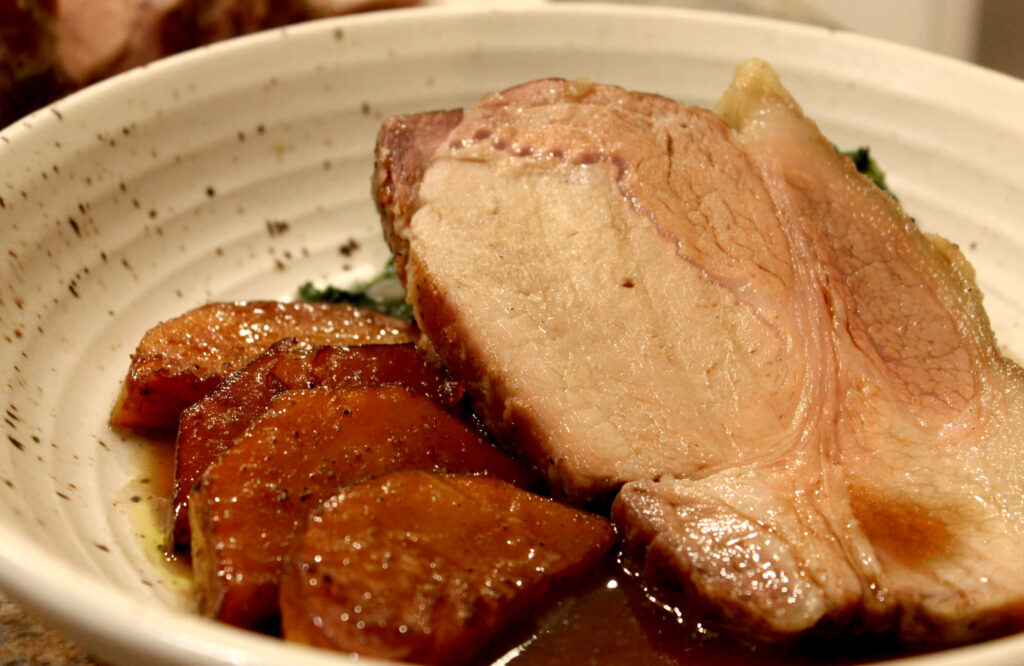
I will kick this off by saying that this is every bit as delicious and as satisfying as it looks. It’s a great comforting combination of a cured piece of pork belly, a perfect impeccably cooked portion of loin, tart cabbage cooked with onions and bacon, seared marinated mushrooms and a rich flavor-packed pork sauce to round it all off. Did I mention that all of this goes with a side casserole of truffle-flavored cheesy macaroni? There is nothing here that does not hit a perfect note. The inspiration of this dish according to the recipe intro is Heston Blumenthal’s love of the cast iron pan called cocotte  that he uses to cook meat over an open fire while camping. Now, at a fine dining establishment like the Fat Duck where consistency and efficiency are paramount using a cast iron pan is not the most efficient way of cooking the “Pot-Roasted” loin of pork. The title of the recipe is meant to invoke a nostalgia of the cast iron pot-roasting even though the meat is perfectly cooked sous vide.

I started working on the dish by preparing the pork belly and the pork sauce. The belly was cured in a brine of salt, nitrite salt, water, lots of herbs, lemons zest, juniper berries, allspice, cloves, coriander and star anise. After sitting in the brine for 48 hours, I soaked the belly in several changes of fresh water. Then I bagged it with some water and cooked it sous vide for 36 hours. After it is cooked and cooled I skinned it and trimmed all but a thin layer of surface fat and divided it into several perfect cubes that got bagged individually in FoodSaver pouches. The pork belly pieces were frozen until service day. At that time, I warmed up the pouches in water to loosen the pork belly and then removed them from the bags and seared them gently on the fat layer until they got brown and crispy.

For the sauce, I sautéed pork bones, pork meat, onions and carrots  in a mixture of oil and butter. These then went into a pressure cooker along with chicken stock, water and some herbs and cooked at full pressure for a couple of hours. The stock is then cooled, strained and reduced to a sauce consistency. Right before service, I heated it with a few sage leaves and whisked in a little butter.

Preparing the pork loin was a bit similar to the belly process. The loin, on the bone, is poked at several places and stuffed with sage and garlic. It is then salted heavily and left to cure with lemon zest and a lot of thyme for 48 hours. Then I washed the salt off and soaked it in a few changes of water. I removed the bone and wrapped the meat into a tight cylinder in plastic wrap. That went into a FoodSaver bag and was cooked at 60 C before serving.

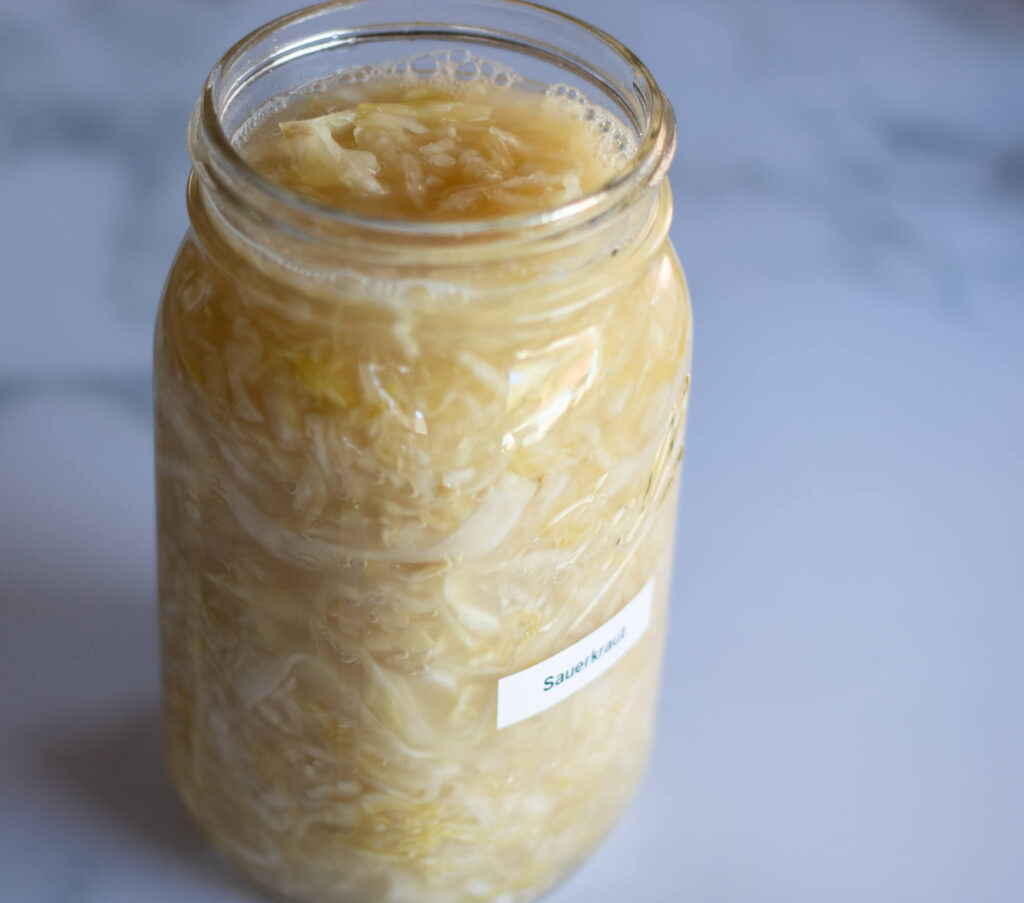
Two other items actually go on the plate with the pork: sautéed cabbage and mushrooms. To make the cabbage, I first made the “Choucroute Onions”. That’s basically a very flavorful mixture of onions, bacon, juniper, allspice, white wine and vinegar. At dinner time, I cooked thinly sliced Savoy cabbage in some butter. When the cabbage was tender, I tossed in the Choucroute Onions. The mixture of cabbage and tart bacon-y onions is delicious. It’s kind of like a mild buttery sauerkraut and is a very good use of cabbage. It’s a classic that goes perfectly well with the rich pork meat.

The recipe specifically asks for Porcini (or Cep) mushrooms to serve with the meat. I can never find those tasty but expensive mushrooms fresh anywhere, but I can find them dried and use them all the time. Instead of Porcini, I opted to use king trumpet mushrooms and large white button mushrooms. I marinated those by vacuum packing them with olive oil, thyme and a few pinches of pulverized dried Porcini  mushrooms. They marinated for several hours and then I patted them dry and cooked them with butter to a nice golden brown.

As opposed to most fine dining recipes where every dish is self-contained typically with all components on one plate or bowl, several recipes in The Fat Duck book include “side dishes”. A lamb dish is served with a sweetbread hot pot, a venison saddle has a beaker of clarified stock with it, sole is served with triple-cooked chips, and this pork dish gets a luscious side of truffled macaroni. Originally, Blumenthal instructs the cook to boil zita macaroni (long tubes) and then cut them into 1 cm cylinders. Instead, I decided to make my own pasta. So, following the Marc Vetri process that I posted about recently, using semolina and water I made the dough and extruded it using the rigatoni plate on the machine. I cut the pasta much shorter than typical rigatoni as it was being extruded to mimic the short zita that the recipe asks for. After the pasta is cooked it gets tossed in a mixture of cream, stock, and Parmesan cheese. The recipe asks for truffle juice to be added in as well, but I skipped that pricey item and seasoned the mixture with excellent Italian white truffle salt. To finish the pasta, I plated it in small individual casseroles and topped it each one with a few tablespoon of an egg and cream mixture. The casseroles then get broiled to brown the surface a bit and are good to go.

To plate, I put a small pile of the cabbage and flanked it with both types of meat. A couple of mushrooms go in the center and the sauce is poured gently around and over the meat. We each got a small casserole of the macaroni on the side and enjoyed this complex and tasty plate of food.

Read Full Post »

Older Posts »

Follow

Get every new post delivered to your Inbox.

Join 31 other followers

%d bloggers like this: