Ingredients
Equipment
Method
Traditional "stove top" Method
- In a pot mix the milk and the cream with the glucose (if you are using it) over medium heat. Mix the sugar with the stabilizer if you are using it and add to the dairy mixture in the pot. Keep whisking and making sure the mixture does not scorch or boil over. As soon as it comes to a simmer remove it from the heat.
- Cut each vanilla bean in half lengthwise and scrape the pulp with the tip of a knife. Add the beans and the pulp to the dairy mixture and let everything infuse for at least 30 minutes, but it can infuse for a couple hours too. If you are using vanilla extract, WAIT and add that all the way at the end.
- Remove the vanilla pods and squeeze them well to extract every bit of flavor from them. Bring the mixture back to a simmer. In a bowl, whisk the egg yolks very well. Add a small ladle (about 1/3 cup) of the hot dairy mixture while to the yolks while whisking. Add 3 or 4 more ladles of dairy to the yolk whisking all the time. This is called tempering and the goal is to start heating up the yolks but not scramble them. When about half of the dairy mixture is added to the yolks, pour the yolk-dairy mixture back into the pot and place over medium heat. Keep whisking or stirring with a spatula all the time until the mixture hits about 180F on a thermometer, it should thicken and coat the back of a spoon.
- Place a fine sieve over a bowl and strain the custard through it. You will notice some solids in the sieve. these are tiny pieces of cooked egg and we do not want them in the ice cream. Add the vanilla extract if you are using that. Cover the bowl and refrigerate the custard for at least 4 hour, but really 8 or even 24 hours is better. Now the custard is ready to be churned into ice cream.
The Immersion Circulator ("sous vide") Method
- Place all ingredient in a blender EXCEPT for the vanilla beans. If you are using the vanilla extract, add that to the blender as well. Blend very well using medium speed to get a smooth and homogenous mixture.
- Pour the custard into a bag for sous vide. Cut each vanilla bean in half lengthwise and then across a couple of times to get 16 pieces total. No need to scrape the pulp out. Add the cut up vanilla pods to the bag. Seal the bag.
- Heat a water bath with an immersion circulator to 85 C. Add the bag with the custard mixture and then drop the temperature to 82 C. Cook for 25 minutes. Every 10 minutes or so, move the bag around a bit to agitate the mixture for a more even cook. Remove the bag and cool it in an ice water bath, moving it around every so often for an hour or so to chill it.
- Refrigerate the custard in the bag for at least 4 hour, but really 8 or even 24 hours is better.
- Place a fine sieve over a bowl or pitcher, open the bag and strain the custard through the sieve into the container. You will notice some solids in the sieve. these are tiny pieces of cooked egg and we do not want them in the ice cream. Now the custard is ready to be churned into ice cream.
Churn the Ice Cream
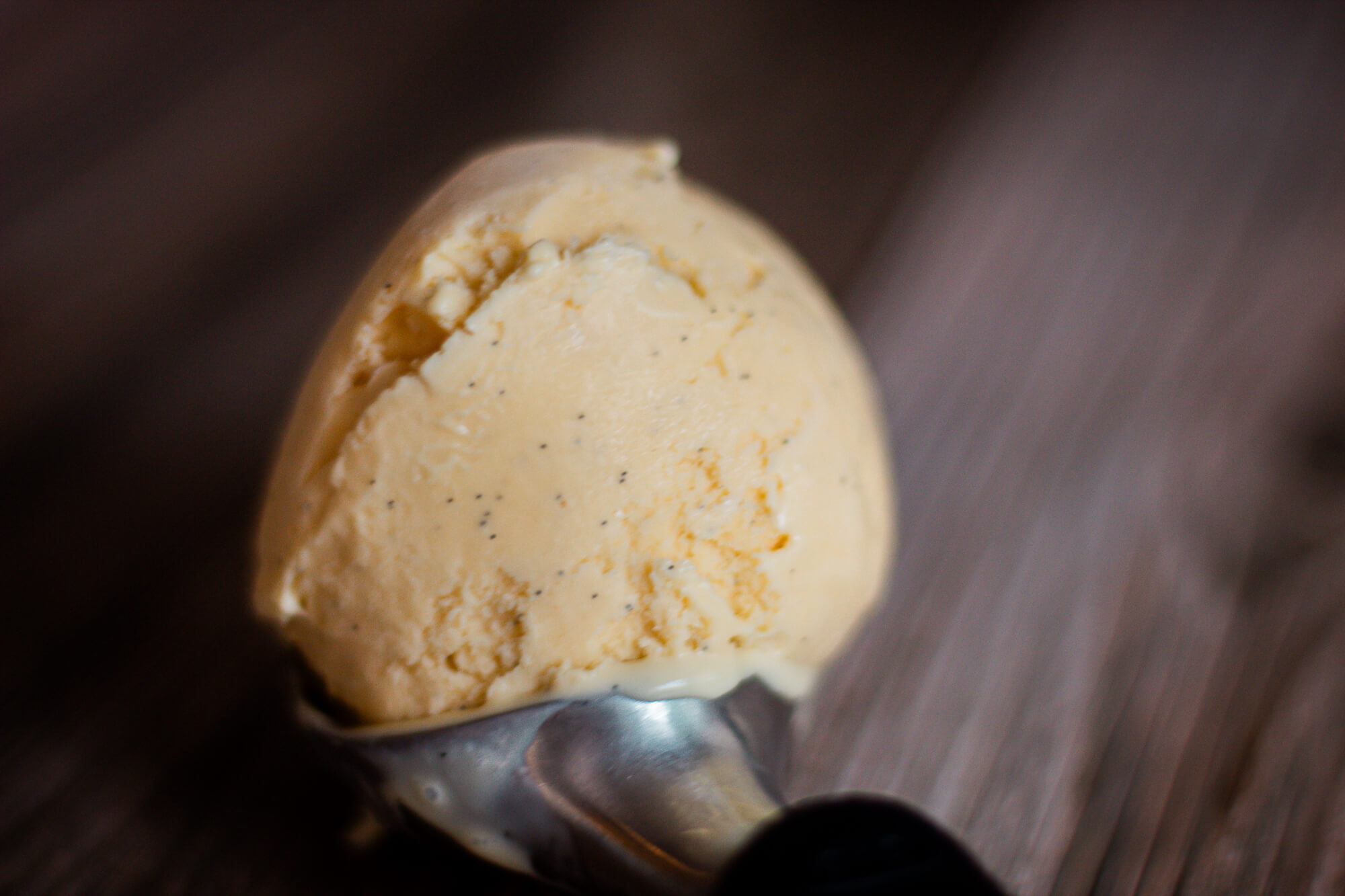
- Churn the ice cream in your ice cream maker following its manufacturer instructions.
- Store in an airtight container in the freezer with a plastic wrap or wax paper on the surface to limit dryness. Usually the ice cream maintains it's quality for up to a month depending on the freezer conditions.
Notes
* Glucose syrup is less sweet than regular sugar (sucrose) and helps give the ice cream a better texture by reducing ice crystal formation. I buy mine online. Feel free to omit it and use -as the recipe suggest- a couple extra tablespoons of sugar.
** Ice cream stabilizer can be easily purchased on the internet. They are made from a mix of hydrocolloids and are very helpful in very small quantities (1 to 3 gr per batch of ice cream) to reduce ice crystal size and keep your homemade ice cream's texture better for longer. You do not have to use them but I almost always do. They do vary in strength a bit between brands, so read the instructions and follow them at least the first time around. After that you can reduce or increase the stabilizer amount to your liking. For example, if the churned ice cream ends up a little too "slippery" and chewy in texture, use less next time.