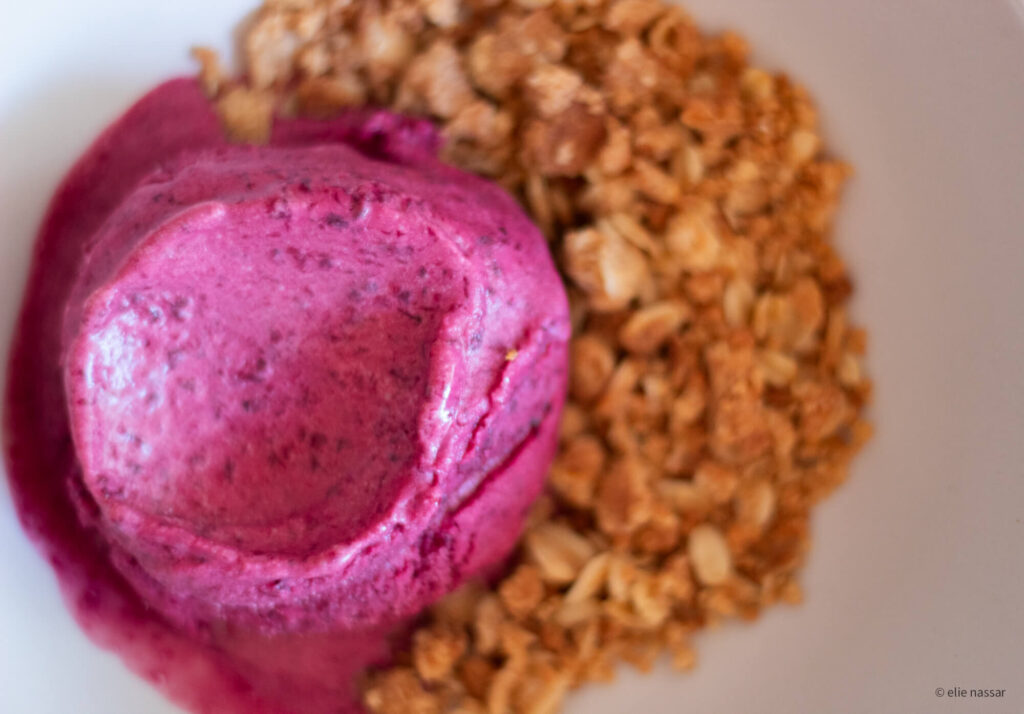
A good fruit ice cream is phenomenal. It’s a favorite in the spring and summer when fruits are at their peak. They are also, in my experience, notoriously difficult to get right. All credit to this version of a fruit-based ice cream (Cherry here, but is very adaptable to similar fruit) goes to Serious Eats and Stella Parks (aka Bravetart). Parks also has several variations on the recipe in her excellent book, BraveTart: Iconic American Desserts. It’s not the quickest of processes but the end result is damn near perfect.
Impatient? Skip to the recipe.
Recommended post to read for more information: Vanilla Ice Cream: Custard Base
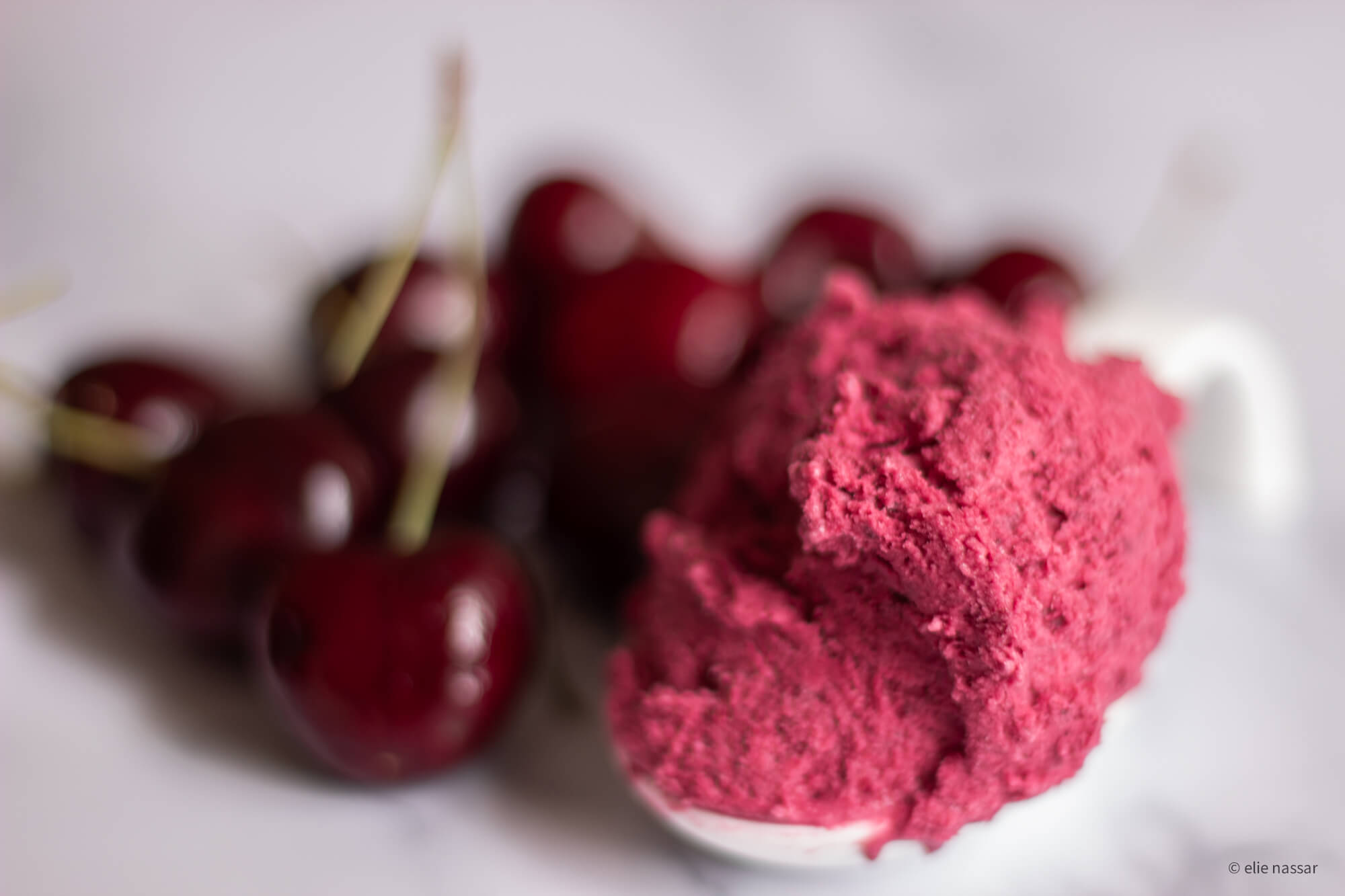
Ice cream, gelato and sherbet are dependent on lots of variables that have to be adjusted to get a good result. I go into some of those details in the Vanilla Ice Cream post. In the case of fruit, we are throwing in yet another highly variable product. The main culprit when you add in fruit is water. They -mostly- have a lot of it, but it’s also not constant from one type to another. An apple is in no way similar to a strawberry or mango.
Another issue is flavor intensity. You might be able to get away with using less peaches than blackberries and still get a decent peach flavor. Start adding more and more blackberries though to up the flavor and you end up with a watery ice cream base and lots of ice crystals.
Some common ways of getting around this is to cook the fruit into a jam more or less and either add it to the base evenly or swirl it in. Not a bad option and I like that but still, we are not hitting peak fruit ice cream flavor in my opinion.
Another version of ice cream with plenty of fruit I tested a couple of times is from a gelato book that relies on a base of fruit “juice” and thick Greek yogurt with tons of stabilizers. I really wanted to like this one, but after a few tries with various flavors I really do not like it. Not a great texture and the flavor is not ideal. In reality, there will never be a “one size fits all” fruit ice cream recipe, but this one comes very close. It will work with almost any stone fruit and any berry. I have not tried it with drier stuff like apples or mangoes, but I suspect with some minor modifications it should work well. I’ll post those when I try them.
This recipe has a very short set of ingredient. It relies on the fruit and the pectin in it to help with texture. The cooking process for the fruit does not make a thick jam, but more of a sweet puree. We start off by roasting a lot of fruit with sugar until soft, for cherries they should be soft enough that you can easily squeeze the pits out.
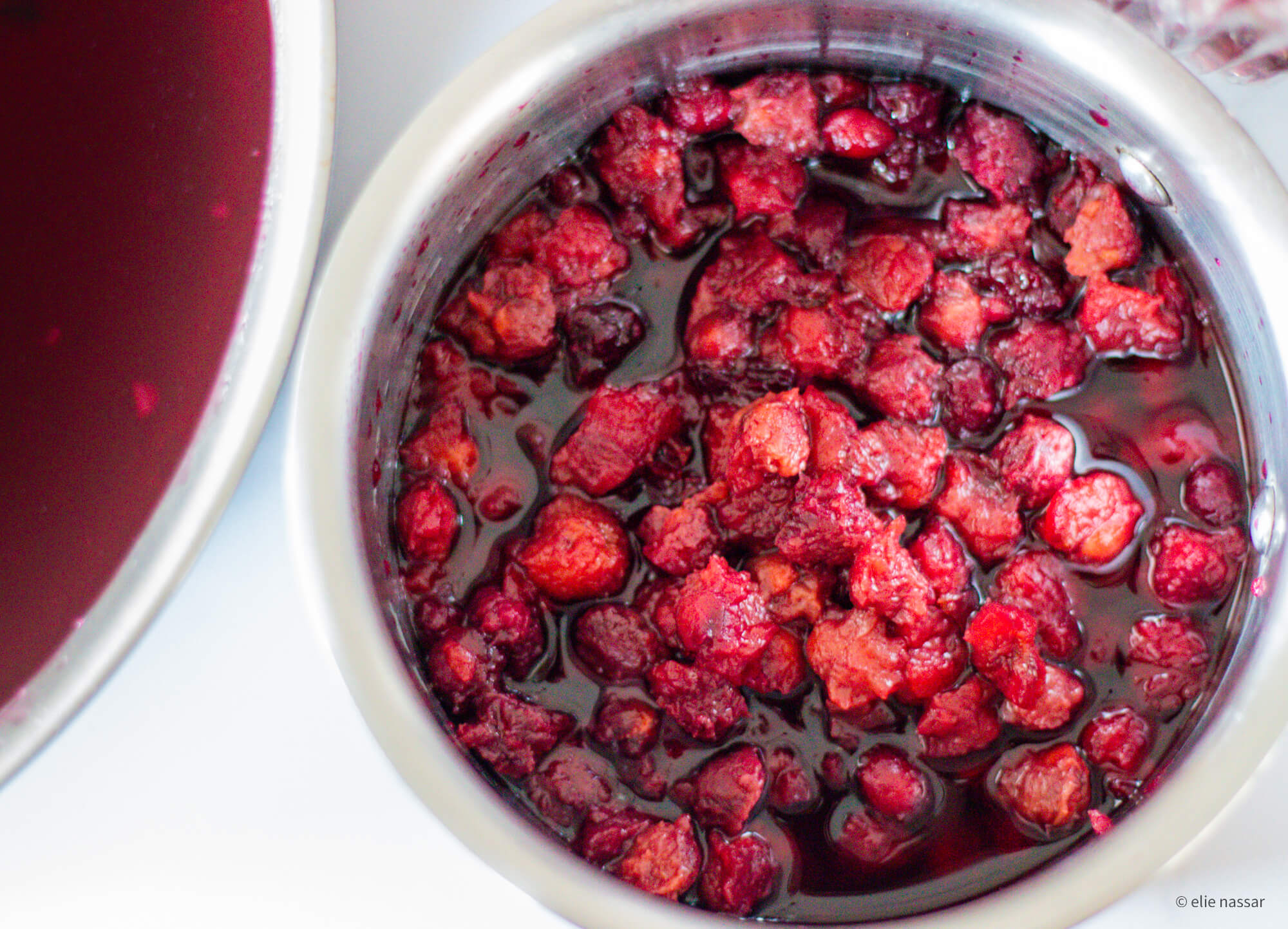
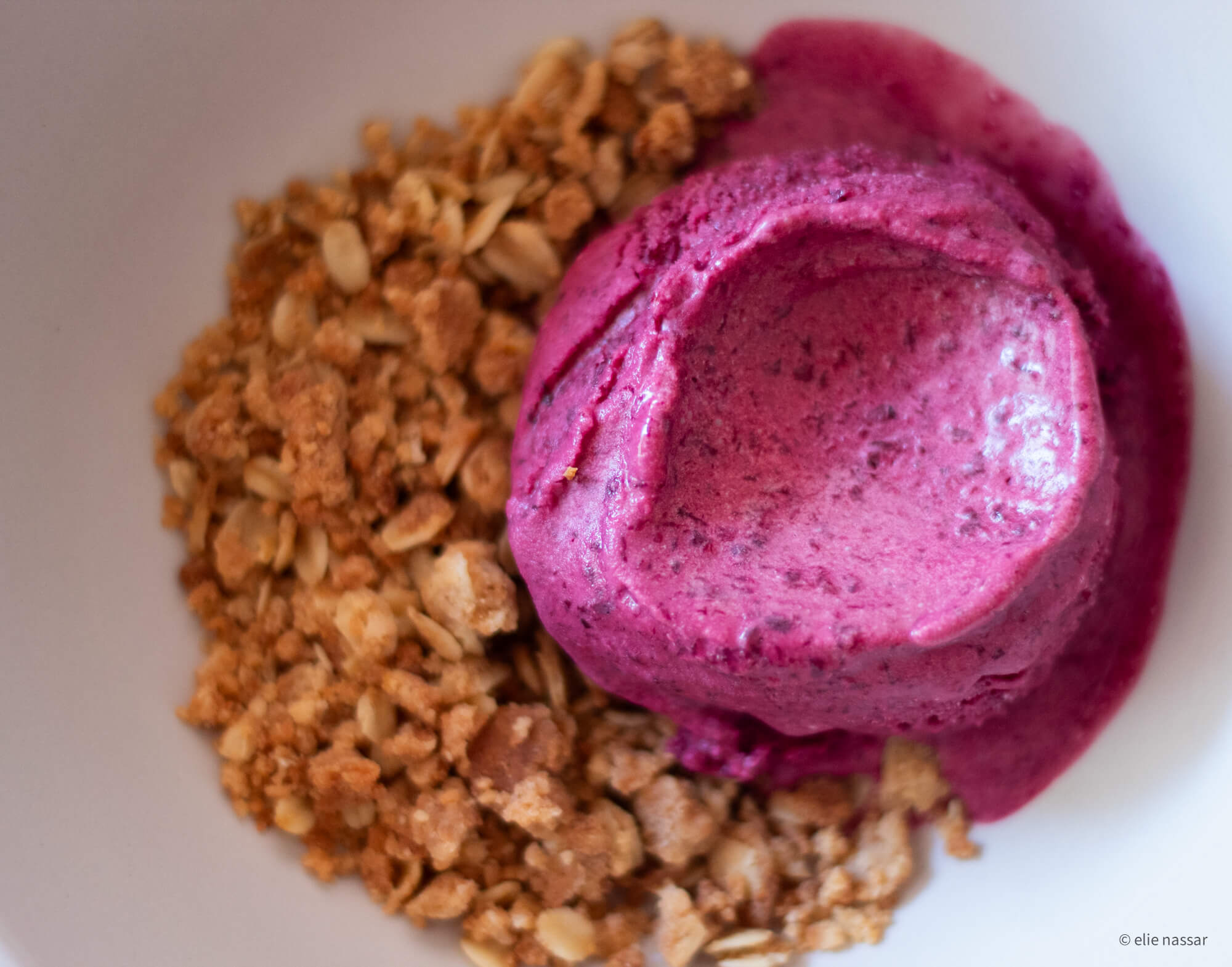
The fruit then gets passed through a sieve and the collected juice/puree is reduced for a bit. The amount of fruit and this cooking process ensure that there is plenty of flavor in the finished ice cream and the puree does not have an excess of flavorless crystal forming water. It has enough, just not nearly the same as the fresh fruit. For the dairy, with the amount of water still in the fruit, we only need heavy cream. Adding milk that is basically 97% water is not a good idea. The end result is a fruit ice cream with an amazing color, huge fruit flavor and creamy texture. It is smooth and can be scooped straight from the freezer with no problem.
Ice Cream Formula Summary:
- Base: Fruit and cream
- Stabilizer: Pectin in fruit, no added stabilizer
- Dairy added is heavy cream only
- Cooking method: Oven to roast fruit, stove top to reduce fruit puree
Adapted from and/or Inspired by:
- Serious Eats Cherry Ice Cream by Stella Parks
- Bravetart: Iconic American Desserts by Stella Parks
Cherry Ice Cream: Fruit and Cream Base
Ingredients
Equipment
Method
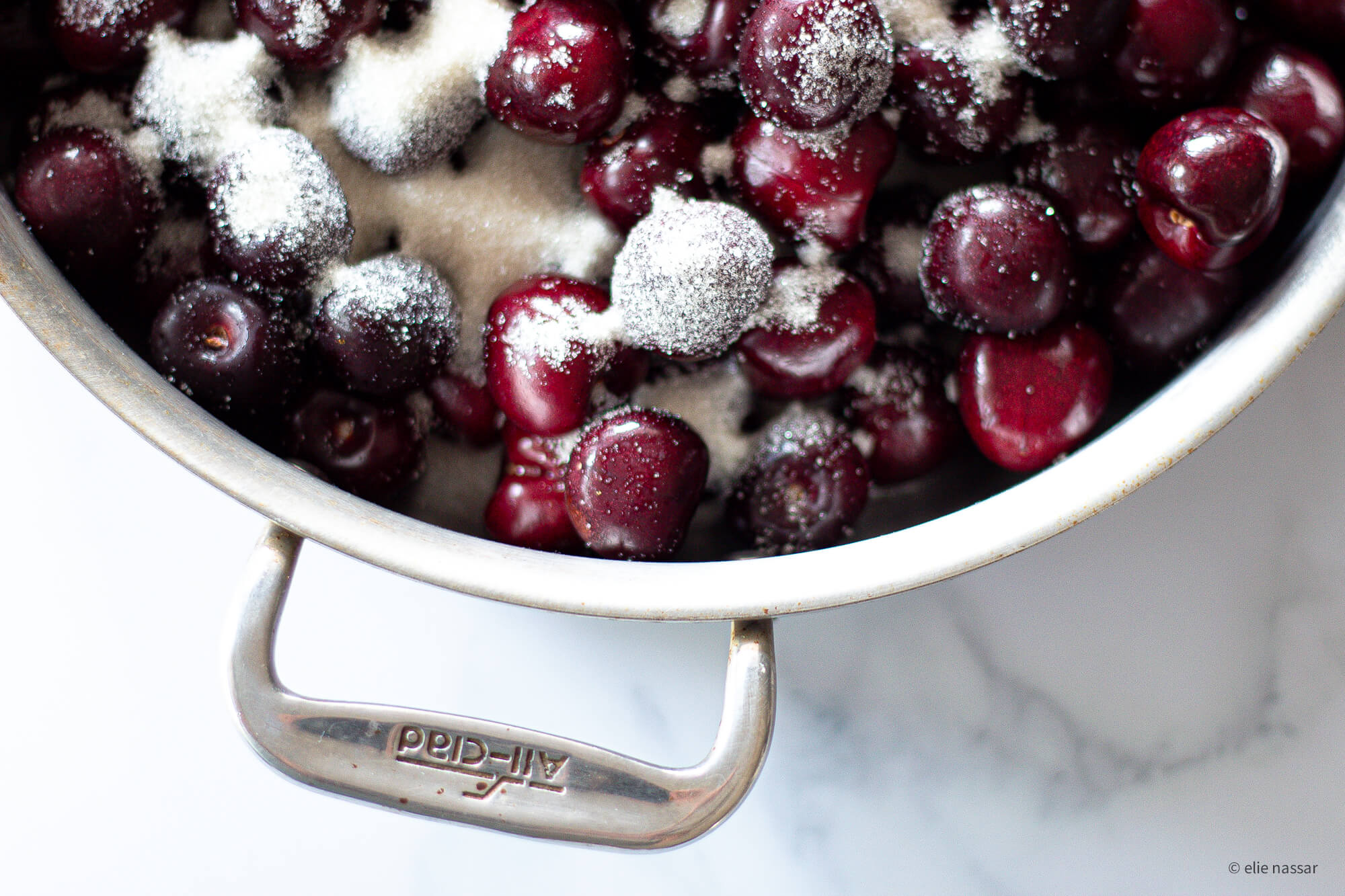
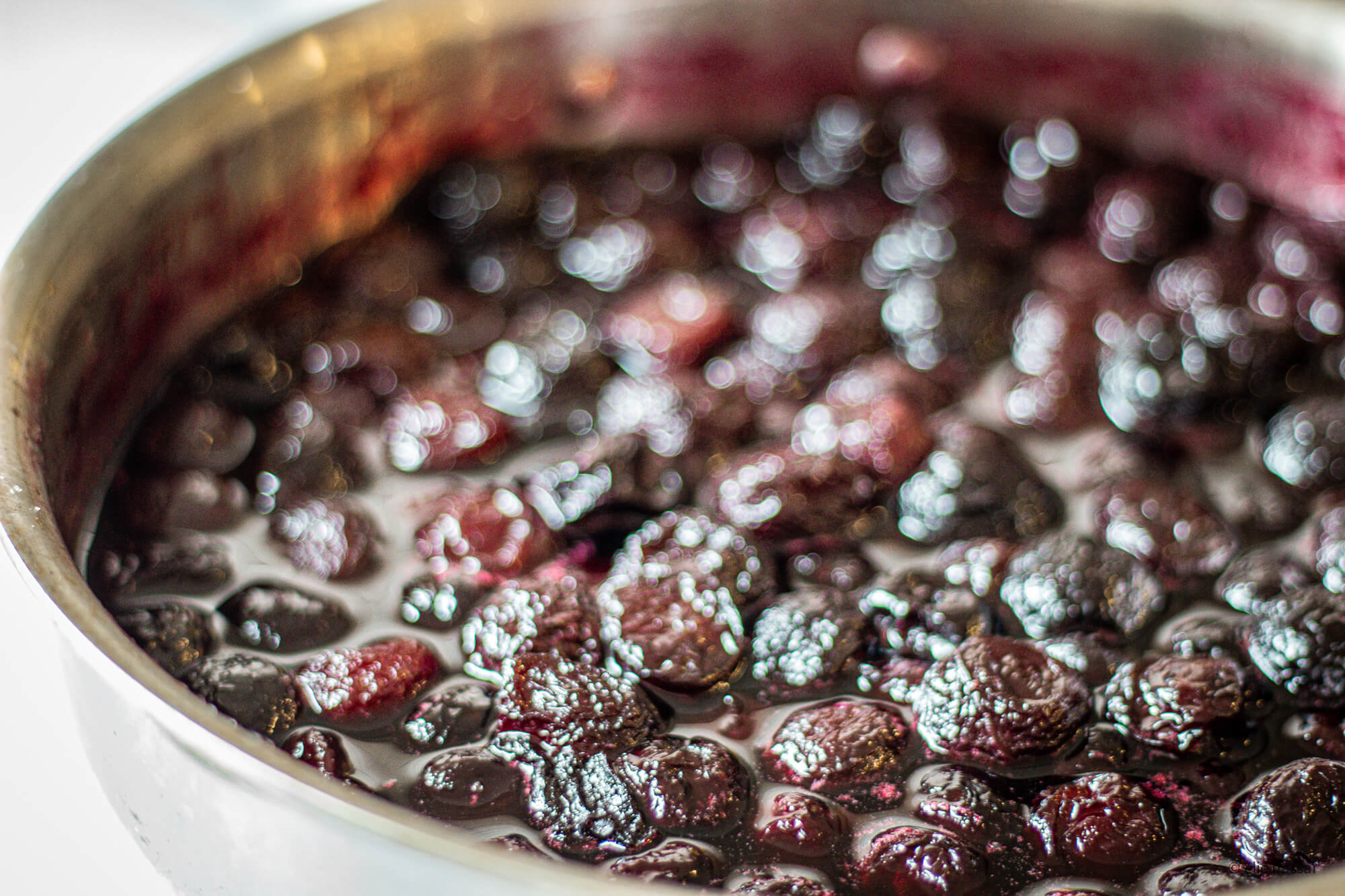
- Heat your oven to 450 F. Place the cherries in a baking dish or oven-safe skillet with the sugar (less cleanup if you use the skillet since you can use it later for cooking the fruit puree). Roast until soft, make sure to stir them a few times during the baking time for evenness. This should take about 1 hour and the cherries should be soft enough to easily squash with your fingers with little resistance but not falling apart or mushy.
- When cool enough to handle, gently squash them with your fingers to remove the pits and reserve any roasting juices in the baking dish or skillet. Put the pits in a small sauce pan with the cream and bring to a simmer. Turn the heat off, cover and let them infuse. Place the pitted cherries in a blender or processer, or use a stick blender, and pulse them to get a chunky broken up mixture. You are not looking for a puree here, just to break up the pieces and allow more juices to be released. Place the chopped up cherries back in the roasting skillet or if you used a baking dish transfer them with any juices to a wide skillet.
- Place the skillet over medium heat and cook the mixture stirring frequently to reduce it and thicken it, about 10 minutes. The mixture should look a bit jammy and you can easily see the bottom of the pan when you scrape it.
- Pass the chopped up reduced cherries through a sieve, pressing well and scraping the bottom of the sieve to get every last piece of goodness. You should be able to collect about 560 gr of fruit juice/puree and be left with a good bit of pulp and skin in the sieve. If you end up with way more than 560 gr of fruit puree, return it to the pan and reduce a bit more, but a few grams more or less are not going to matter. That leftover pulp in the sieve is delicious, do not toss it. It is great mixed into scones, muffins or as a topping for yogurt and granola. It lasts a few weeks in the fridge.
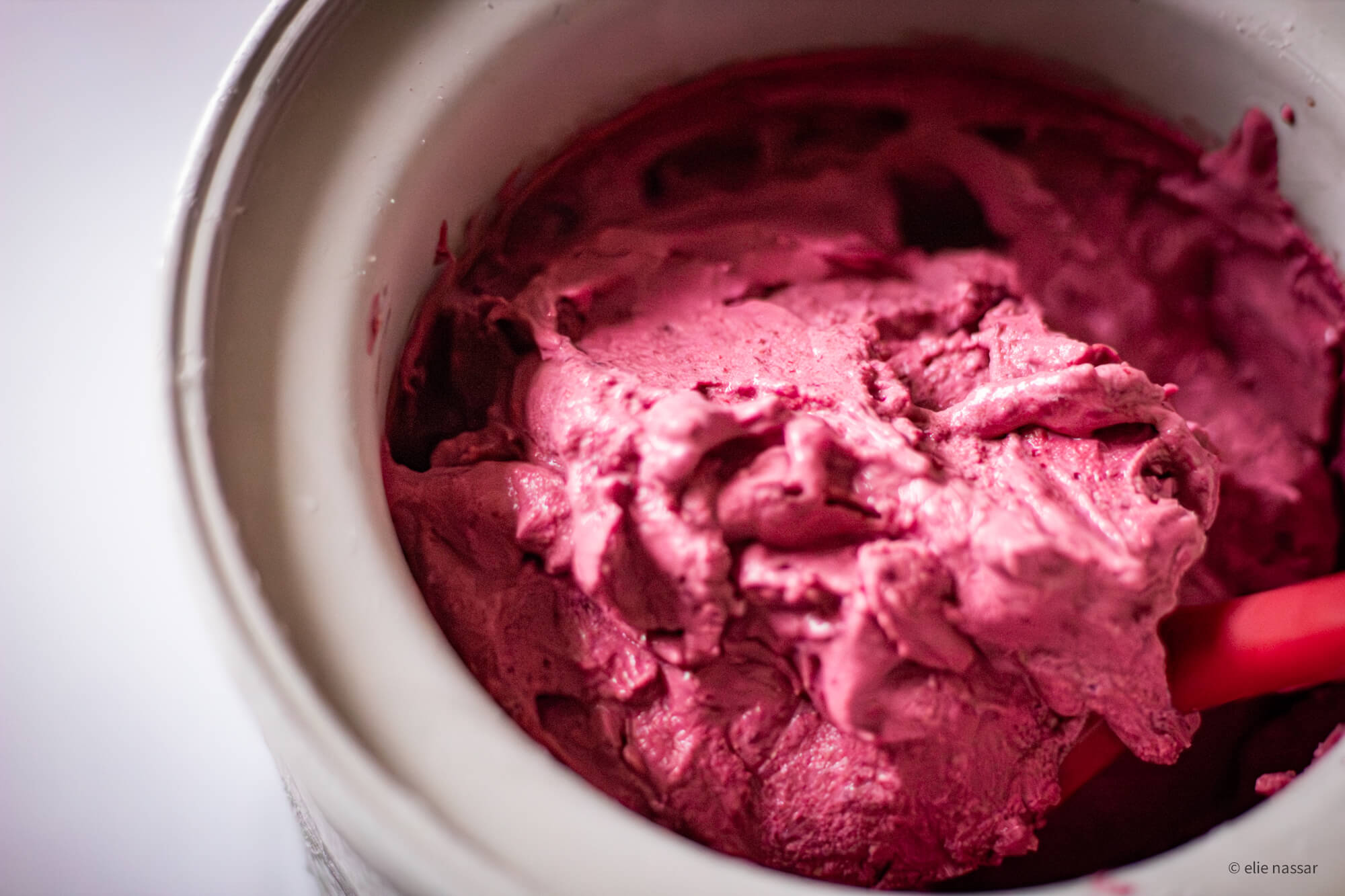
- Using the same sieve strain the cherry pit infused cream into the fruit puree. Add lemon juice and a pinch of salt. Chill the mixture in the fridge for at least 4 hours but preferably overnight. Churn in your ice cream maker, pack and freeze. This is an ice cream that should be easily scoopable straight out of the freezer.

Are you familiar with Lindeman’s Lambic? The Kriek flavor makes an excellent cherry flavor ice cream!
Definitely know Lindeman’s but never tried it in ice cream. Thanks for the tip.